
How Video Exhibits for Court Improve Jury Understanding of Cases?
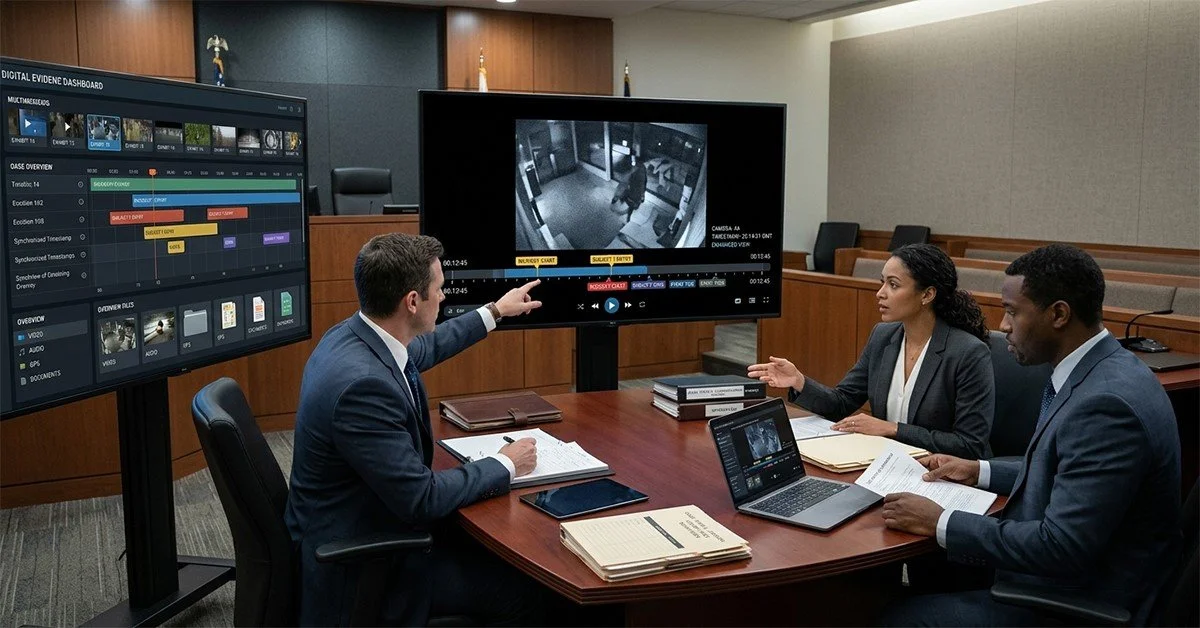
A jury cannot visit the accident scene, stand in the driver's seat, or watch the crash happen again. Yet they still have to decide what happened. That creates a challenge in vehicle collision and pedestrian injury cases. Reports, photos, and testimony provide pieces of the story, but they do not always show the full picture. The video exhibits for court help bridge that gap by turning accident data into clear visual evidence that jurors can see and understand.
Why Reading About an Accident Is Different From Seeing It?
A police report may explain where vehicles were located. An expert may discuss speed, distance, and reaction time. A witness may describe what they saw. However, jurors must combine all that information inside their heads. That process becomes difficult when several people tell different versions of the same event.
A visual reconstruction removes much of that guesswork. Instead of imagining what happened, jurors can watch a recreation based on accident evidence and expert findings. As a result, they spend less time trying to build a mental picture and more time evaluating the facts.
What Happens When Critical Details Stay Hidden From Jurors?
Small details often decide major cases. A driver may claim that a pedestrian appeared suddenly. A pedestrian may claim the driver had plenty of time to react. The truth often depends on factors that are easy to overlook. For example:
Trees may block a traffic sign.
A vehicle's A-pillar may hide a pedestrian.
Parked vehicles may reduce visibility.
Lighting conditions may affect reaction time.
These issues can remain buried inside reports and photographs. A reconstruction video helps bring those details into plain view so jurors can understand their impact.
How Driver-Eye Perspectives Change the Way Evidence Is Viewed
One of the strongest tools in accident litigation involves showing the roadway from the driver's perspective. This approach answers questions that jurors naturally ask:
What could the driver actually see?
How much time did they have to react?
Was the hazard visible?
Did road conditions affect visibility?
Rather than relying on assumptions, a visual reconstruction allows jurors to experience the scene from the same viewpoint as the actual accident participants. That often creates a much deeper understanding of the evidence.
Why Accident Reconstruction Data Needs Visual Translation
Accident reconstruction experts perform the technical analysis. They examine measurements, vehicle damage, road evidence, timing calculations, and collision dynamics. Their findings are extremely important. However, technical information does not always connect with jurors. This is where forensic video work becomes valuable. The reconstructionist determines what happened. The video analyst transforms that information into a visual format that helps a jury understand the subtle complexities of a case.
How Visual Evidence Connects Technical Findings to Human Understanding
Accident reconstruction experts often work with large amounts of technical data. They analyze vehicle movement, impact points, timing, and roadway conditions. However, jurors rarely think in technical terms. This is where video exhibits for court plays an important role. Jurors do not need more information. They need clearer information. Video exhibits transform expert findings into visual presentations that help jurors see how events unfolded, making complex accident evidence easier to understand and evaluate.
Why Real-World Filming Often Carries More Weight Than Basic Animation
Not all courtroom videos create the same impact. Simple animations may show movement, but they often fail to recreate actual conditions. They are more like a cartoon than what the drivers actual saw. Real-world filming at the original site and under similar conditions allows the jury to see for themselves what was available to be seen at the time of the accident. Road design, intersections, visibility challenges, lighting conditions, and environmental factors become easier to understand because they appear in a realistic setting. That realism can make complicated accident evidence feel much more relatable.
How Do Visual Reconstructions Help Jurors Remember Important Facts?
Trials often involve days of testimony. Jurors hear from police officers, witnesses, attorneys, medical professionals, and experts. Information overload becomes a real problem. Visual exhibits help organize that information and can be played back again at any time. That makes evidence easier to process during deliberations. It also reduces confusion when multiple parties present competing explanations.
Why Strong Courtroom Visuals Support More Than Just Trials
These exhibits do more than assist juries. Attorneys frequently use reconstruction videos during:
Mediation
Settlement discussions
Expert presentations
Case evaluations
A clear visual explanation often helps all parties understand the strengths and weaknesses of a case before trial begins. And often changes what the other side offers because suddenly your position is clearly shown in a manner that would help convince a jury.
Bottom Line
Complex accident evidence becomes much easier to understand when jurors can see it rather than simply hear about it. Visual reconstructions help explain visibility, timing, roadway conditions, and other factors that may influence how a case is evaluated. As a result, well-prepared video exhibits for court can help present evidence in a way that feels clear, logical, and easier for jurors to follow.
As Good As It Can Be Digital specializes in creating high-quality forensic accident reconstruction videos that transform technical findings into courtroom-ready visual evidence. Using detailed 6K video production, driver-perspective filming, and real-world scene recreation, wehelp attorneys present accident cases with greater clarity and stronger visual support. The goal is simple: help jurors understand what happened by turning complex accident data into visuals that make sense.